Wednesday, 6 January 2016

691. Wonderful New Portrait Of The Queen On New Canada Post Stamp.


  Canada Post will release new definitive stamps in the "Permanent" ('P') rate on 11 January 2016. The first is a marvellous new portrait of Queen Elizabeth II sold as a booklet of 10 self-adhesive stamps. The issue was lithographed by Lowe-Martin and the printer's imprint at the top right of the booklet is an amusing depiction of 4 corgi dogs. Rating:- *****.


  On the same date, 5 new UNESCO World Heritage site stamps will also be issued by Canada Post. The stamps are produced in self-adhesive format in booklets of 10 stamps (2 x 5 different stamps) and as a gummed miniature sheet containing all 5 stamps. The stamps were designed by Lime Design Inc. Rating:- *****.


  Guernsey Post will issue a number of Post and Go stamps and labels on 17 February 2016.
  The IAR kiosk, GG01 will be used at the Spring Stampex 2016 philatelic exhibition (in London where, of course, the dispensed labels will have no postal validity), from 17 to 20 February 2016.
   The kiosk will dispense labels with new designs which depict animals of Guernsey - the extinct Guernsey golden donkey, the Guernsey golden goat, the Guernsey cow, the Atlantic grey seal, the puffin and the blond hedgehog, all in a "Collectors strip". 
  The kiosk will also dispense a "Collectors strip" of the Guernsey Flag labels in 6 values all with the additional inscription "500 Years of Postal History" to mark the fact that Royal Mail has chosen to claim that 2016 is its 500th anniversary year (see Blog 689).
  Back in Guernsey itself, Kiosk GG02 will dispense the Guernsey animals stamps in a "collectors strip" but with the additional inscription "Envoy House". After Stampex the Guernsey Philatelic Bureau will sell (not dispensed from a kiosk directly to the purchaser) labels produced by the B series kiosks in 2 strips  - the 6 Guernsey animals labels and the 6 Guernsey Flag labels with the added inscription "500 Years of Postal History". Keen "Post And Go" collectors will therefore have a total of 5 new strips to buy - that is - 30 new "Post and Go" labels/stamps (only 6 of which are to be dispensed directly to the customer from a kiosk situated in Guernsey itself).
  Meanwhile, Royal Mail's first contribution to "Post And Go" products of 2016 will result in issues for Spring Stampex which take the form of a "Collectors strip" of Machin Head labels with the added inscription "500 Years of Royal Mail" which will be sold from the IAR kiosk at the exhibition for the 4 days of Stampex only and from no other source and so I view this item as nothing more significant than an exhibition souvenir.
  There will also be an IAR kiosk-dispensed Collectors strip of 6 values of the Royal Mail Heritage Transport stamps (see Blog 689) and an additional IAR kiosk-dispensed Collectors strip of 6 Locomotive Royal Mail Heritage stamps. Dealers will be able to pre-order the above items presumably printed by a 'B' series machine. At this stage the announcement of these items seems to suggest that collectors will only be able to buy the Heritage Transport stamps (presumably entirely printed in photogravure and sold in the usual pack) from the Philatelic Bureau and not the Machin Head 500 Years and the Heritage Locomotive strip. 
  Singapore Post will issue a new Mystamp sheetlet on 8 January 2016 to commemorate the Year of the Monkey. It consists of 6 stamps (3 each of 2 different designs ) attached to 6 labels (again 3 of 2 different designs). The same 2 stamps will also be sold in a sheetlet sold in a folder. The sheetlet consists of 14 stamps (7 of each stamp) plus 11 stamp-sized labels each depicting a different creature of the lunar zodiac. The folder also contains a second sheetlet which is made up of 4 stamps (2 of each design) plus a central "money bag" design which symbolises "to attract wealth and treasure".


  Singapore Post will issue 3 basic stamps on 7 January 2015 to commemorate the Lunar new year. The issue was designed by Leo Teck Ching and lithographed by Southern Colour Print. A "Collectors sheet" will also be issued containing 1 x $5 and 1 x $10 stamps which was lithographed with photochromic and iridescent ink by Cartor. Finally, the 1st local value will also be sold in self-adhesive format in a sheetlet of 10 stamps. Rating :- *****.


Monday, 4 January 2016

690. Beatles' George Harrison Depicted On New Bangladesh Issue.


  The Bangladesh postal administration has issued 2 new miniature sheets, in perforate and imperforate format, which commemorate the Concert for Bangladesh which was actually 2 concerts held at Madison Square Gardens in New York on 1 August 1971. The concerts were organised by George Harrison, former guitarist with the then popular British musical group, The Beatles, and Ravi Shankar, a Bengali musician. The aim of the concerts was to raise international awareness of and raise funds for refugees from East Pakistan following the Bangladesh liberation war.
  I do not yet know the date of issue of these interesting sheets. Rating:- *****.


  The postal administration of Bangladesh has also issued 4 stamps and 1 miniature sheet on the subject of traditional boats of Bangladesh. Again, I do not yet know the date of issue.


  Finally, a single stamp was issued to commemorate "Victory Day" but as yet I do not know the date of issue. Rating:- ***.


  The Trinidad And Tobago postal service issued a set of 4 stamps and 2 miniature sheets contained in a special pack on 20 June 2014 to commemorate the 40th anniversary of the establishment of the country's diplomatic relations with The People's Republic of China. This issue was reported in a previous blog some time ago but, apart from seeing it offered by one Internet dealer, I have not seen any dealers offering it for sale. This remains the case but I now have better illustrations of the issue which features Chinese and Trinidadian flowers and birds. The illustrations below also show the front cover of the pack and the 2 pages which each hold one of the miniature sheets. It makes a very attractive issue. Rating:- ****.


Front cover of pack.

First page of pack.

Second page of pack.

  India Post issued a single stamp on 30 December 2015 to commemorate the Institute for Defence Studies and Analyses. Rating:- *.


  Four days into the new year and Stamperija has wasted no time in announcing its latest release of philatelic products with the name of Sierra Leone printed on them. Said to have been "issued" on 23 October 2015 the collective subject of these items is Birds and, as usual, there are 10 "sheetlets", each consisting of 4 different stamps plus 10 " miniature sheets". These products are similar in format to most of the items emanating from Stamperija and so are really not worth illustrating. For the record the subjects of the sub-sets are Ibises, African Penguins, Pigeons and doves, Birds of Paradise, Warblers, Protected birds, Ducks, Flamingos, Tropical birds and Peacocks. Rating:- 0

  Finally, I depict below the miniature sheet which Guernsey Post will issue on 20 January 2016 to commemorate the Lunar new year of the Year of the Monkey (see Blog 684 and the new Commonwealth Stamps Opinion Catalogue 2016 blog):-


Sunday, 3 January 2016

689. England's Approximately Five Hundred Year Old Mail Service.

Sir Brian Tuke, Master of The King's Posts, painted by Hans Holbein.

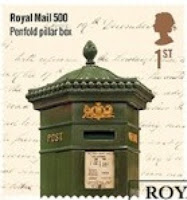
  Royal Mail will issue a set of 6 stamps and a miniature sheet containing 4 different stamps on 17 February 2016 to commemorate the Quincentenary of postal services in England which are judged to have begun in 1516.
  According to Wikipedia, The King's Book Of Payments of 1512 records that a payment of £100 was made to Brian Tuke as master of the posts. In February 1517 he was officially appointed to the title of Governor of the King's Posts in 1517 having been made a Knight of the King's Body the previous year. In 1522 he was promoted to be French Secretary To the King and on 17 April 1523 Tuke was appointed to be the Clerk of Parliament. In 1528 he was made one of the 4 Commissioners to treat with France and later was made Treasurer of the Royal Household. In 1533 Tuke became High Sheriff of Essex and Hertfordshire. He died on 26 October 1545.

  The information about Brian Tuke's life published in Wikipedia leaves me perplexed as to why 2016 has been chosen as the Quincentenary Year of Royal Mail given that the Master of The King's Post existed before then and that Tuke's official appointment as Governor occurred in 1517. I turned to my copy of Duncan Campbell-Smith's admirable book, "Masters of The Post The Authorised History of The Royal Mail" (Allen Lane 2011) to see if it would enlighten me.
  The opening chapter gives a marvellously interesting account of how late Medieval English people dealt with sending post to other towns and cities and the beginning of the royal postal service. Quite aptly, given that one of the very best sources, if not the best, of information about modern British stamps is Ian Billings of Norvic Philatelics, based in Norwich, Campbell-Smith points out that our best source of knowledge of late Medieval English mail is derived from the survival of the numerous correspondence of the Paston family of Norfolk. This family regularly corresponded with each other from Norfolk to London and back from c.1420 to 1500 and used one of 2 mail systems - either using acquaintances or family retainers to take mail with them when travelling to places to which post was being sent or by using private mail carriers, "common carriers", who plied their trade from the mid-fifteenth century.
  Apt also to notable anniversaries being commemorated philatelically during 2016, Campbell-Smith also speculates about another important correspondence taking place at the end of the 16th century - that between William Shakespeare living in London and his family and servants in Stratford-upon-Avon in deepest Warwickshire (see below). Campbell-Smith speculates that much mail must have been carried on Shakespeare's behalf by a Stratford-based common carrier and mercer called William Greenway (who lived in Henley Street where Shakespeare's birthplace and the present post office are located) whose mail "service" dated from 1581. It is also known that Greenway took mail to London from Stratford in 1598 to be delivered to one Richard Quiney, a Stratford man, who is the  author of the only known existing letter addressed to William Shakespeare (its existence is due to Quiney never having sent it). 
  Greenway's son, Richard, and Edward Bromley were also common carriers in Stratford who may have carried Shakespeare's mail (from Shakespeare's Letters by Alan Stewart, Oxford University Press, 2008).
  Carriers left letters for collection at a network of taverns and in 1637 The Carriers Cosmography listed dozens of London inns to which carriers delivered mail from all over England. Campbell-Smith points out that the very year of publication of the Cosmography was the year that a separate mail system, the King's Posts did indeed take centre stage.
  Campbell-Smith states that "The King's Posts were .... probably first used effectively during the Wars of the Roses" (50 years before the currently commemorated Quincentenary) and that "Letters between the royal Court and those on the king's business were nothing new: we know of several, for example, carried from France during the Hundred Years War" (100 - 150 years before the presently celebrated Quincentenary). 
  Campbell-Smith mentions royal posts during the reigns of Edward IV and Richard III, who set up "post stations" roughly a dozen miles apart where "post-riders" carrying the king's despatches could be provided with a fresh horse for the next stage of the journey en route to the place where the king's messages were required to be delivered.
  Campbell-Smith recounts that it was Cardinal Wolsey, Henry VIII's Chancellor, who appointed Brian Tuke in 1512 to take proper responsibility for the running of regular King's Posts during periods when reliable communications were needed because of a short ongoing war with France. Campbell-Smith writes that "It is easier to sketch this development of the service in conceptual terms than to chronicle it with precise dates". 
  Initially, it was required that all towns in the kingdom should be prepared, at their own expense, to make a fresh horse available to any post-rider travelling on the king's commission and Campbell-Smith points out that that actually involved supplying 2 horses since one would be needed to accompany the post-rider as a local guide and then to return to the town with the tired horses when the rider had arrived at the next stage of his journey. Tuke appointed men who would run a stable for the designated horses in return for a basic state wage. These men were called postmasters and then deputy postmasters and the process of establishing a series of post towns along a given route became known as "laying a post". The deputy postmasters were given exceptional powers to ensure that there were no delays to the King's Post. 
  The items carried by the King's Posts were called "packets" to be passed along from one post to the next without the need for them to be carried by the King's post-riders in person. Important state papers continued to be carried by royal messengers as "through posts" but all other packets were carried as "ordinary posts" by "post-boys".
  In his account of Tuke's introduction of this service, I can find nothing that Campbell-Smith particularly identifies about innovations of 1516 which pick the year out as the beginning of the royal mail. 
  Reading Royal Mail's own publicity about this commemoration, it seems to identify Brian Tuke's knighting in 1516 as the event which is being celebrated 500 years later. This seems remarkably arbitrary and surely can not be as significant as his appointment in 1512 by Wolsey to take charge of the King's Mail or his official recognition in 1517 as Governor of the King's Posts. Referring to Tuke's knighting Royal Mail says, "This act was the catalyst for the creation, over time, of the Royal Mail we know today. The newly-knighted Tuke had the influence and authority to start to establish key post-towns across the country and build out a formal postal network". Yes, but surely it does not represent the birth of the postal service.
  This looks to me like another marketing gimmick similar to the silly idea that 2015 represented the 50th anniversary of the start of Great Britain's commemorative stamp programme which it plainly did not. It seems that someone suddenly realised that Royal Mail had overlooked the events of 1512 and was keen to take publicity and merchandising advantage of the anniversary one way or another (well, you can't blame them can you?) but it does seem like a very contrived anniversary. 


  Six new "Post and Go" stamps will be released on 17 February 2015 which are also on the subject of the Quincentenary of Royal Mail. They depict modes of transporting the post through the ages and make an interesting and attractive issue. I presume that they will be available in 3 formats - from IAR kiosks sited at the Spring Stampex 2016 philatelic exhibition in London and at the 4 delivery offices in various parts of the country, from NCR kiosks sited at various post offices around Britain and from presentation packs sold by the Philatelic Bureau - that's actually 18 new stamps.


  A further issue follows on 28 February 2016 which takes the form of a booklet of 6 stamps which commemorate the 150th anniversary of the Penny Red along with another Prestige booklet.


  Back to Shakespeare. One of the designs of the proposed set of stamps to be issued on 5 April 2016 which will commemorate the quatercentenary of the death of William Shakespeare has been revealed by Royal Mail. I am disheartened by the design which is about as dull and uninteresting as any British stamp design which has gone before. If the published example is anything to go by, the design is nothing more than a piece of calligraphy which quotes a line from Shakespeare's work. There appears to be no pictorial element to the design at all.  
  What a missed opportunity to produce an exciting set of designs featuring some of Shakespeare's immortal characters illustrated by original art or perhaps by photographs depicting great Shakespearean actors in some of those roles (yes I know both of those approaches have been used before but they were highly successful and memorable especially when compared with the upcoming stamps which look like they deserve 2 out of 10 for effort). Perhaps Royal Mail could have used the artist who designed the Star Wars stamps to provide a similar issue but substituting Star Wars characters with Shakespeare's dramatis personae.


  A stamp from the third issue to commemorate the centenary of the First World War to be issued on 21 June 2016 has also been unveiled. This shows an interesting piece of art, "Battlefield Poppy" by the photographer, Giles Revell. My only complaint here is that it is yet another "Poppy" stamp, of which there seems to have been a great number in recent years, and it would be pleasing if we could now have some original subjects featured on the stamps in this continuing series. 


  Finally, Royal Mil will issue one of those irritating "Commemorative sheets" (total face value of stamps £6.30p but sold for £14.95) on 12 January 2016 to commemorate the 60th anniversary of the Duke Of Edinburgh's Award scheme. It would have been nice to have a couple of stamps actually commemorating this remarkable man's 95th birthday but perhaps Buckingham Palace did not wish Royal Mail to put out such an issue feeling that the set to commemorate The Queen's 90th birthday was quite enough.


Friday, 1 January 2016

688. Stamps .... The End (Part 2).


 On 1 January 2015 I published Blog 500, "Stamps ... The End" which it is useful to read before turning one's attention to this piece. In it I sought to examine, based on my own personal mail, just how much stamps are actually used on ordinary mail in these present times. I have now repeated the exercise to see if the situation has changed in the past year.
  I used the same method as outlined in Blog 500 and examined each piece of personal mail I received over a 6 month period from June to December 2015.

  I received a total of 329 items of mail during the study period compared with 491 items received during the same study period in 2014. This is a startling reduction of 162 (33%) items of mail from 2014 to 2015. I can not identify any personal circumstances which have changed in that 12 month period which would account for my receiving considerably less mail than one year previously. This finding is consistent with observations by others that far less mail is being carried in the world's postal systems than before.

  Of the 329 items, 267 (81.1%) had been posted in the United Kingdom and 62 (18.9%) were sent from abroad. This is almost the same ratio as 2014 when 82.7% had originated in the United Kingdom and 17.3% had been posted abroad.

  Of the 329 items of mail, 62 (18.9%) had been sent using stamps to pay the postage (this compares with only 4.3% in 2014).

   Of the 267 items of mail which were posted in The United Kingdom, 232 (86.9%) had no postage stamp fixed to them and 229 (85.8%) were considered to have been sent by a non-philatelic source (73.6% in 2014) and of those originating abroad only 1 came from a non-philatelic source (1.6%).

  Of the 35 items of domestic mail which had stamps attached to them, only 1 (2.8%) had a contemporary commemorative stamp (2nd class Christmas stamp), 5 (14.3%) had Machin definitives, 8 (22.9%) had machine printed labels/Post and Go stamps/Horizon labels and 21 (60%) had old commemoratives attached to them (including old Christmas stamps).

  Of the 61 philatelic-sourced items posted from abroad, 33 (54.1%) had no stamps attached (32.5% in 2014) and 28 (45.9%) were sent with postage paid using stamps (67.5% in 2014). Of the 38 (14.2%) items of domestic mail considered to be philatelic in nature 16 (42.1%) had no stamps attached to them (34.6% in 2014).

  Thus in this small study I have observed:- 
  1. A notable reduction in mail received through the post compared with 12 months ago. As stated above, I am not aware of any change in personal circumstances which would explain this observation.

  2. There was no real change in the ratios of domestic to foreign mail received in 2015 compared with 2014.

  3. I noted an increase in the percentage of mail received with postage stamps attached in 2015 compared with 2014 (18.9% v 4.3%).

  4. 13.1% of received domestic mail had postage stamps attached to it in 2015 compared with only 2.7% in 2014 but only 1 item was cancelled with a contemporary commemorative stamp and that was a 2nd class Christmas stamp. 60% of stamps used on domestic mail were old commemoratives and were generally attached to mail from philatelic sources.

  5. 45.9% of mail received from foreign philatelic sources was cancelled with postage stamps compared with 67.5% in 2014. 

   The 2 main points I have learned from this year's study are that the amount of mail received through the post appears to have reduced significantly in the past 12 months and that while postage stamps continue to be used on mail, particularly old commemoratives on mail from philatelic sources, the usage of contemporary commemoratives, either by non-philatelic or philatelic mail senders, is minimal to virtually non-existent and when such stamps are used they are mainly 2nd class Christmas stamps used on greeting cards.

  This finding that modern commemoratives are virtually unused on ordinary mail is in agreement with similar findings in 2014 and raises the question as to whether there is any postal need whatsoever for such items. They are simply produced for sale to stamp collectors who buy them because they have been released on to a market which is aimed entirely at them (apart from issues such as the Royal Mail Star Wars set which is more likely to appeal to enthusiasts of the film series than to stamp collectors). If stamp collectors did not continue to buy the ongoing flood of new issues then postal authorities would have no reason to issue them and a vicious circle would be broken.

  Meanwhile, one of the most bizarre issues of 2015:-
  

   The USA-based philatelic agency, IGPC, has released a set of 4 stamps in the name of the Grenada postal administration on the subject of the 70th anniversary of the anti-fascist victory by The People's Republic Of China. The stamps are extraordinary because they inscribed almost entirely in Chinese and it is doubtful that an ordinary Grenadan who bought one of these stamps would have a clue about what the stamps commemorated. It's hard to believe that these items are freely on sale across the counters of ordinary Grenadan post offices. I have not seen a "date of issue" for this set up to now. Rating:- 0,