Thursday, 20 December 2012

181. British Postal Museum Post And Go.


The first of a new series of Post And Go stamps were released by Royal Mail on 3 December 2012. They are only obtainable from Hytech machines situated at the British Postal Museum and Archive in London. The machines are situated in the foyer of the Search Room at Freeling House. The first items are available in two designs - the standard Machin Post and Go design as depicted above and the Christmas robin design, shown below. The usual 6 values are available in each design. The stamps are distinguished by the additional inscription "The B.P.M.A." which is different from the inscription which has been illustrated by some other sources including recent editions of some British philatelic magazines.


One recent British issue which appears to have received poor publicity is yet another Diamond Jubilee item - a booklet of 6 1st class "Jubilee definitives" as shown below. On the inside front cover is a quotation from the Queen, "I shall always work to advance the happiness and prosperity of my peoples". I think this issue, released on 1 October 2012,  may well have been missed by a number of collectors and I have the feeling that this is "the one to get".


On 16 October 2012, India issued 4 stamps and a miniature sheet which contained one each of the stamps on the subject of "Endemic species of Indian Biodiversity Hotspots". They are interesting and attractive but the title of the issue is interesting in its own right - we seem to have travelled a long way from a simple "wildlife of India" issue.


I have previously mentioned the Malaysia coinage issue which was released on 16 July 2012. It is very well printed and now that I have received my set, I illustrate 2 of the designs of the set of eight which are all 60 sen values:-


I have also now obtained my specimen of the Malaysia Diamond Jubilee miniature sheet which was issued on 13 September 2012 and I also illustrate that highly collectable issue:-


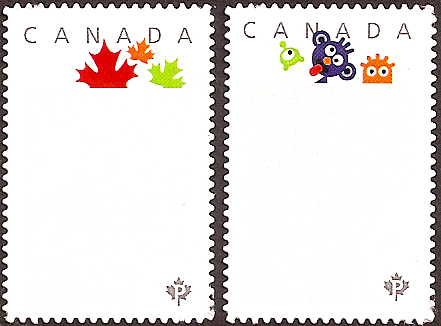
Also obtained in the last couple of days has been my order of the personalisable Canada Picture Postage 12 stamps which I have also previously mentioned and which were issued on 5 November 2012. I illustrate 2 of the designs:- 

Back to India, which has issued another miniature sheet of interest - an item released on 12 October 2012 to commemorate "Philately Day". The stamp design does not actually give the precise date of Philately Day but presumably it coincided with the date of issue of the miniature sheet:-


Yet more items produced by Stamperija with the name of Mozambique printed on them, this time the theme is "Anniversaries II", some of them obscure and none of them of direct relevance in subject matter to Mozambique. The date of issue is given as 30 June 2012 and among the 60 stamps and 10 miniature sheets are items related to the artist Gustav Klimt:-


and the aviator, Harriet Quimby:-


So by June, Mozambique had "issued" 464 stamps and 86 miniature sheets during 2012! Finally, a new definitive set has been announced for Ascension Island to be released on 15 January 2013. It features aircraft and is designed by Robin Carter and lithograph printed by BDT International Security Printers:-


Wednesday, 19 December 2012

180:- Bye-ways of Empire - The Floridas and Georgia.


John Moultrie
I was very interested in a short auction report which appears in the January 2013 edition of the excellent  Stamp Magazine, the most lively of the currently published British philatelic magazines which are on sale at newsagents in Britain. The report mentioned a recent sale by Kelleher Auctions of a letter sent from one of the British colonies in north America to another, 11 years before the American unilateral declaration of independence and subsequent rebellion against Britain. The letter listed the items in the estate of the late Chief Justice of East Florida, James Moultrie, a document humdrum and everyday in one respect, but given interest by the application of a British tax handstamp. It was the need to pay taxes, which the American colonists felt no obligation to do, that made these tax stamps the very symbol of the cause for revolution. Stamps indeed can be said to have started a war. 
The letter was sent in 1765 from Savannah in the colony of Georgia which had been established by Britain in 1732 to John Moultrie, the Governor of the British colony of East Florida which had been established in 1763. The reverse of the cover bore an extremely rare SAVANNA straight-line handstamp with a Bishop mark of AP 25. The item realised £45,541 in the auction, ten times its estimate. Doubtlessly this reflected the rarity of the Savannah postmark but the whole letter seems to be a remarkably interesting item.  I find it particularly interesting in that it recalls a distant time when the British colonies still existed in north America and it brings to our attention the little known British colony of East Florida along with its sister colony of West Florida.

Inventory of Moultrie's estate and tax stamp applied to it.
After the defeat of the French and their allies in the Seven Years War, the British took possession of Spanish Florida and French Louisiana east of the Mississippi (except New Orleans). It did not seem possible to administer this large amount on new territory as a single entity so the British established the two new colonies of East Florida, with its capital at the old Spanish town of St. Augustine, and West Florida, with its capital at Pensacola; the colonies being separated by the Apalachicola river. Many English Americans and Scottish-Irish Americans moved to these colonies after the end of the Seven Years War and an assembly was established there as part of the colonies' government. The territories were strongly loyal to Britain and when the rebels in the other American colonies summoned delegates to the First Continental Congress in 1774, the Floridans refused to attend. Florida retained its loyalty during the rebellion against Great Britain but the Spanish entered the war on the side of the rebels and captured Pensacola in 1781 and were awarded Florida after the defeat of the British in 1783 by the Treaty of Paris. Thus these little known early British colonies came to an end but the recently auctioned letter is a wonderful example of their ephemeral postal history and testament to their one-time existence.


General James Oglethorpe
As regards Georgia, the colony's charter had been granted to General James Oglethorpe on 21 April 1732 by King George II. Oglethorpe (shown above on a US stamp of 1933) saw it as being a haven for resettled debtors and "the worthy poor" and he established strict laws for the colony including a ban on alcohol. He was against slavery and thought that it was far better to have numerous farms on which several people found employment rather than to have large plantations. He also foresaw that his "sturdy farmers" would defend the southern part of England's colonies against the Spanish in Florida. The colony's charter forbade slavery.
  Oglethorpe arrived with the first settlers at Yamacraw Bluff - what became Savannah - on 12 February 1733 (as depicted on a pre-stamped postcard issued by the United States Post Office in 1983) and established a camp there with the help of Chief Tomochichi. The first settlers numbered 116 persons. Having been ruled by the trustees of the founding company, Georgia became a crown colony on 7 January 1755. Slavery was permitted from 1749 and by the time of the rebellion of the Thirteen Colonies, Georgia had taken on the characteristics of the other territories.


Monday, 10 December 2012

179. Bye-ways Of Empire - The Mosquito Coast.


One of the ports of call on my recent visit to central America and the Caribbean was the island of Providencia in the island group of San Andres, a department of Colombia. It was an exciting place to visit since it had once been part of what was called The Mosquito Coast which for a period in the 19th century had been one of the more obscure parts of The British Empire, albeit one with a rather limited postal history.


Colombian naval vessel off Providencia
Our ship arrived off Providencia on a day of poor weather and rough seas, as can be seen above, making landing there very difficult. The island was discovered by Daniel Elfrith in 1629 who told the Governor of Bermuda about it leading to involvement of the Earl Of Warwick and the establishment of the Providence Island Company. The first settlers, English puritans, landed on 24 December 1631 and established a colony which had two aims - forming a commonwealth of God-fearing people who would support themselves by growing tobacco and cotton and to provide a base for assaults on Spanish shipping in the area of the Spanish main. African slaves were brought to the colony to work on the plantations although the industries failed and were replaced by sugar cultivation. In May 1641, a Spanish treasure fleet overran the colony which consequently came to an end.
 The arrival of the colonists on the island had the consequence of bringing the British into their first contact with the Miskito Indians who lived on the nearby Mosquito Coast, on the eastern coast of what is now Nicaragua and southern Honduras. The Providence Island Company sent the son of the King of The Mosquito Coast to London to visit the court of King Charles I and the prince returned to central America on his father's death to become king there. Despite the loss of Providence Island, the English resumed contact with The Mosquito Coast in 1655 after seizing Jamaica from the Spanish and King Oldman visited the court of King Charles II who gave him a "lac'd hat" and a commission to "kindly use and relieve such straggling Englishmen as should chance to come that way".
 The Miskito king, Edward, concluded a formal treaty of friendship and alliance with Britain in 1740 and subsequently the British and the Miskito cooperated in attacks on Spanish settlements. From 1742, King Edward allowed the British to establish plantations and settlements in Miskito territory and several hundred Englishmen with thousands of their African slaves lived there by 1786. Although the Spanish were unable to dislodge the British from the Mosquito Coast during the American War of Independence, by the 1786 Convention of London the British evacuated their settlers from the territory to Belize.
 From 1787 the Spanish brought settlers from the Canary Islands to The Mosquito Coast but the attempted colonisation was not successful and the Miskito King George II attacked and liberated the town of Bluefields in 1797 and expelled the Spanish from the rest of his territory in September 1800. With the wars of independence against the Spanish in the second decade of the 19th century, the Miskito renewed their alliance with Great Britain and their kings travelled to Belize for their coronations, the first being King George Frederic Augustus in 1816. In 1844, the Miskito agreed to the establishment of a formal protectorate by the British although this was opposed by The United States, Nicaragua and Honduras. The Americans feared that the British would dominate the building of a canal across Central America and almost went to war with Great Britain when, in 1848, the latter seized San Juan Del Norte which they renamed Greytown. The Americans bombarded Greytown in 1854 but after negotiations, Britain passed on its protectorate of The Mosquito Coast to Honduras.
 This was against the wishes of the Miskito who consequently staged a revolt and as a result the British made an agreement with Nicaragua which transferred the suzerainty of The Mosquito Coast to that country. Nicaragua recognised the sovereignty of Colombia over Providencia and the other San Andres Islands in 1928.
 During the period of British domination, The Mosquito Coast flew a flag from 1834 to 1860 and this is depicted at the top of this blog. As regards its postal service, Greytown was included in the Royal West Indian Mail Steam Packet Company's network from January 1842 as part of the Jamaica District. This arrangement was discontinued in September 1842 but mail packets called at Greytown again by November 1844. The Greytown office increased in importance when gold was discovered in California and the first distinctive local postmark was used from February 1856. An agency which did not have its own postmark operated at Bluefields from 1857 to 1863. The first handstamp, which was in red, is featured in Stanley Gibbons Catalogue and depicted below:-


A circular postmark was introduced at Greytown in 1864:-


and a third obliterator postmark was used from 1865 at the British postal agency in Greytown with the number C57 in horizontal format applied to contemporary British adhesive stamps which were introduced there in 1865. However, adhesive stamps were only used for one year. From 1875, a fourth postmark was used which combined a small circular date mark with a vertical C57 obliterator cancel for use on reintroduced contemporary British stamps in denominations from a halfpenny to 10 shillings:-


The British post office in Greytown was closed in May 1882 when Nicaragua became a member of the Universal Postal Union. Thus ended Britain's philatelically relevant links with one of its more little-known territories.


178. A Visit To St. Georges.


In my last blog I recorded that I had recently visited 4 Caribbean Commonwealth countries and one of the most enjoyable visits was to lovely Grenada and its remarkably bustling and busy capital of St. George's. I took the opportunity to take a few postal history-related photographs as well as to send myself a postcard from the island. According to the excellent website of the Grenada Postal Corporation, there are 8 district post offices and sub-post offices in Grenada with a further 2 situated on the Grenada Grenadines, one at Carriacou and one at Petite Martinique. The central post office in St. George's is situated right in the heart of town on Bruce Street and is pictured above. The stamps on sale there for use on genuine mail by the general public are the basic definitives as can be seen below, a $1 value being applied to the postcard I sent from there and cancelled by a 4-ringed circular postmark with GRENADA POST OFFICE (I'm guessing at the last word as it is illegible on my postcard) around the top and BRUCE STREET around the bottom with DEC 3 2012 in three lines at the centre of all the circles.

Outside of the post office, a banner was hanging, shown below, which publicised the Grenada Postal Club with the slogan "Preparing To Host Caribbean Postal Togetherness 2014". I wondered if this represented a local philatelic society but in fact the Grenada Postal Club is actually a society for postal workers which organises cultural and sporting events for them in conjuction with postal workers from some of the other Caribbean Commonwealth islands.


Across the bay from the centre of St. George's is Grand Anse post office which is rather bigger and more modern than Bruce Street post office as can be seen below:-


Near to it is an old red pillar box as may be found anywhere in Britain with the royal cipher GR which I guess must date from the reign of King George V:-


It rather looked as though it was in need of a fresh coat of paint and had the appearance of not actually being in use though that may not be the case as the slot for posting was not sealed up.


At the Grand Anse post office, I saw two modern postal vehicles both with the Grenada Postal Corporation logo:-


Other post offices are sited at Grenville in St. Andrews Parish, Victoria in St. Marks Parish, Point Salines International Airport, Sauteurs in St. Patricks Parish, Gouyave in St. Johns Parish and at St. Davids in the south-east of the island. Grenada Postal Corporation seems to be an excellent organisation, certainly it handled my postcard very well, with it arriving at my home in England just 4 days after it was posted. 
 This visit gave me a much improved impression of Grenada's postal service which sadly, for many years, has allowed its foreign philatelic agents to produce enormous numbers of stamps on its behalf, the subject matter of which frequently has no relevance to the island itself. However, it is possible to form a pleasing collection of stamps from Grenada, even today, if one is ruthless in not collecting all the irrelevant and excessive material produced by the foreign agents. Such a collection costs considerably less than a new issue collection of the stamps of Australia or Great Britain. I spoke to one or two Grenadans about their nation's stamp issues and they too expressed a resigned distaste of the sets which commemorated foreigners "who probably had never even visited Grenada". 

Wednesday, 5 December 2012

177. Commonwealth New Issues.

Here, without comment (although readers may draw their own conclusions about how worthwhile some of the issues are), are some of the latest new stamp issues from a wide range of Commonwealth territories and various philatelic agents:-

Cayman Islands
6 November 2012: Christmas - 4 stamps.
Montserrat:
?date: Sites and scenes of China - 2 sheetlets, 1 with 4 stamps and 1 with 6 stamps, and 2 miniature sheets, each containing a single stamp.

Mauritius:
9 October 2012: Anniversaries - 3 stamps
9 November 2012: Local eminent personalities
12 December 2012: 240th anniversary of postal services in Mauritius - 4 stamps.
Uganda:
22 October 2012: Transport - 40 stamps and 10 miniature sheets


A total of 150 stamps and 42 miniature sheets have now been produced on behalf of Uganda during 2012.
Mozambique:
30 April 2012: Extinct and endangered animals - 68 stamps and 10 miniature sheets,


424 stamps and 76 miniature sheets have been produced so far in 2012 on behalf of Mozambique.
Tonga:
14 December 2012: Tongan Royal Wedding - 1 stamp and a sheetlet of 5 different stamps,

21 November 2012: Christmas (religious paintings) - 11 stamps in a sheetlet,
Niuafo'ou
21 November 2012: Christmas (religious paintings) - 11 stamps in a sheetlet.
Ascension Island:
15 January 2013: Definitive series, aircraft - 12 stamps. Designed by Robin Carter and lithographed by BDT International. perf.14.
Cook Islands (Penrhyn):
16 November 2012: Christmas (religious paintings) - 6 stamps and 1 miniature sheet,
27 November 2012: Definitive series, fish - 12 stamps and a sheetlet containing all 12 designs and 3 further miniature sheets each containing 4 different stamps,


Cook Islands:
30 November 2012: South Pacific Conference, 2nd issue - 2 sheetlets
16 November 2012: Christmas (religious paintings) - 6 stamps and 1 miniature sheet,
Cook Islands (Aitutaki):
16 November 2012: Christmas (religious paintings) - 6 stamps and 1 miniature sheet,


A total of 18 stamps and 3 miniature sheets have therefore been produced for The Cook Islands to commemorate Christmas.


Tuesday, 4 December 2012

176. New Trinidad And Tobago Surcharge.


  I have just returned home after an interesting trip to some central American and Caribbean countries, including four Commonwealth countries in the area - Jamaica, Trinidad And Tobago, Saint Lucia and Grenada. In Port Of Spain, I was able to buy the previously illustrated set of stamps which was recently issued to commemorate the 60th anniversary of the independence of Trinidad And Tobago and discovered that the Trinidad And Tobago Post Office has recently issued a new provisional definitive which is a surcharge on the $2.25 value, featuring a toucan, of the 1990 birds set. The original set, printed with a "1990" imprint and watermark spiral script CA sideways, was replaced by "wildlife"-themed definitives in 2001 but some values had been reprinted on paper with spiral block CA sideways watermarked paper although the toucan stamp was not one of the values affected by the reprint. The toucan stamp was reissued on 26 January 2001 with a 75c value surcharge carried out in black ink by Cariflex Ltd. The new $1.00 surcharge was apparently released in August 2012 but I do not know the printer. I also bought another example of the 75c surcharge and found the surcharge to be notably altered in position compared with the example I bought originally in 2001:-


Having previously obtained the pair of stamps issued by Jamaica to commemorate its Diamond Jubilee of Independence celebrations, I did not find anything new to buy on a visit to the post office in the port of San Antonio. The same was also true on a visit to the main post office in Castries, the capital of Saint Lucia, which I visited on 30 November. The post office counters there were selling various values of the "fruit" definitive set and the single value issued in 2011 on the theme of AIDS for use by customers on their mail but they were also advertising this year's royal diamond jubilee set as being for sale. So far in 2012, I was told, that is the only set to have been issued by Saint Lucia and apparently no more were expected. I asked about a possible Christmas stamp but the counter clerk told me that he did not know that any such issue was being produced this year. The Head Post Office in Castries does not appear to have a special counter for philatelic sales which is a shame as at least one couple showed an interest in buying the Diamond Junibee stamps while I was there but, having no identifiable counter to buy the items from, walked away without buying anything.  
 On arrival at St. Georges in Grenada, I found a special stand set up by the Grenada Post Office to sell philatelic items, obviously at face value, to tourists arriving on cruise ships - a commendable effort to promote the local stamps. The stand was run by a lovely lady named Jennifer who allowed me to look at the large range of issues for sale, some of which dated back several years, but both she and I were disappointed that the Kirani James (Grenada's Olympic gold medallist) commemoratives, announced some months age, were not yet available for sale - apparently the Post Office had received them but as of 29 November, they had not been finally cleared for issue at the post offices. I did buy a couple of items which I would perhaps not normally have purchased - the miniature sheet issued a couple of years ago to commemorate the 150th anniversary of the Victoria Cross, one design of which at least featured a Grenadan - Private Johnson Beharry VC:-


and the sheetlet of "Dogs of the World" stamps issued for The Grenada Grenadines in 2011 because one of the stamps featured a black labrador which could be added to my labradors on stamps"- themed collection (shown above).
 Sadly, I did not see anyone else taking an interest in the special post office stand although many of the travelers were elderly and of an age when stamp collecting seems to be increasingly popular - I hope that Jennifer's excellent efforts and polite enthusiasm were rewarded by satisfactory sales.
  Before setting off on my travels I managed to acquire a used example of one of the recent Ghana provisional surcharges which I had not previously seen being offered for sale. I am not sure of the date of issue but, as can be seen, this particular example bears a postmark dated 18.9 2011, I think:-


From elsewhere in the African Commonwealth I have received some other interesting items. From Namibia, there are 2 versions of the circular miniature sheet which commemorates the 20th anniversary of Nampost, issued on 31 July 2012. As can be seen, the sheets feature 2 versions of the Nampost logo, one of which is incorrect:-


I also like very much the set of 4 stamps issued by Namibia on 1 October 2012 which depicts 4 different species of mongoose:-


From Malawi are a set of 5 stamps and a miniature sheet which contains 5 different stamps on the theme of AIDS and HIV:-